There are a lot of misunderstandings and misrepresentations of Biblical Universalism out there, and I’ve written about many of them before, but to make it easy for me to give you some examples (for those who might not be familiar with them, or who might not have read all my articles or books), Dave Jenkins has put a fair number of them together in one place for us to find, in his The Danger of Christian Universalism article.
Now, yes, I realize that he refers to it as Christian Universalism in his article, and that Biblical Universalism (which refers to “Concordant” Universalism) is a better label for what those of us in the body of Christ believe, and while there technically can be a difference between the two at times, the label we use won’t change his misassumptions about the topic as far as his and this article go, so when I refer to his points about Christian Universalism, just know these specific points do apply to Biblical Universalism as well.
Dave’s misassumptions about Universalism:
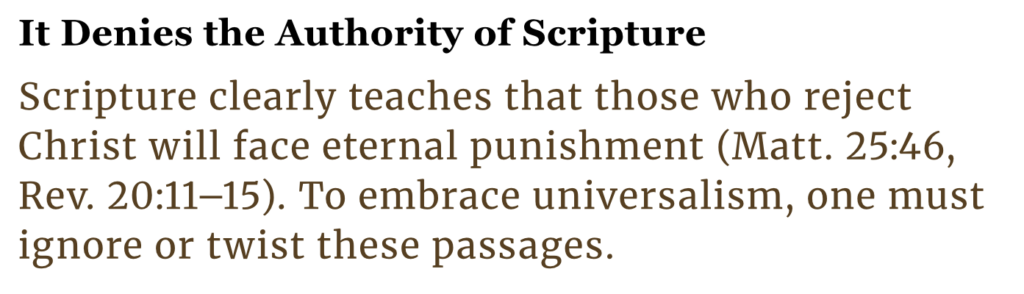
Dave has made the same mistake here that countless other Infernalists and Annihilationists have made over the years, which is to assume that we Biblical Universalists aren’t Biblical Inerrantists who hold to Sola Scriptura, and that we don’t believe every word of the Bible is true. (Okay, to be fair, not all Christian Universalists do, which is why I make the distinction between them and Biblical Universalists, but he’s still wrong in assuming that none of us do.)
If he’d only taken the time to read my free Biblical Universalism eBook before writing his article, he’d know this isn’t the case at all, and that we base our understanding of Universalism solely on what the Bible teaches.
The other problem here, of course (as any Biblical Universalist reading this has almost certainly already noticed), is that he’s also made the common mistake of cherry-picking individual, scary-sounding passages without taking the context of Scripture as a whole into consideration. When one does that, they realize that none of these passages come even close to teaching what he’s assuming they do. This is another reason he should have taken the time to read that eBook before writing his article. If he had, he’d know that there are much better interpretations of those passages that are far more consistent with Scripture as a whole, and which don’t contradict Universalism at all. And I pray he does read it after he finishes reading this article.
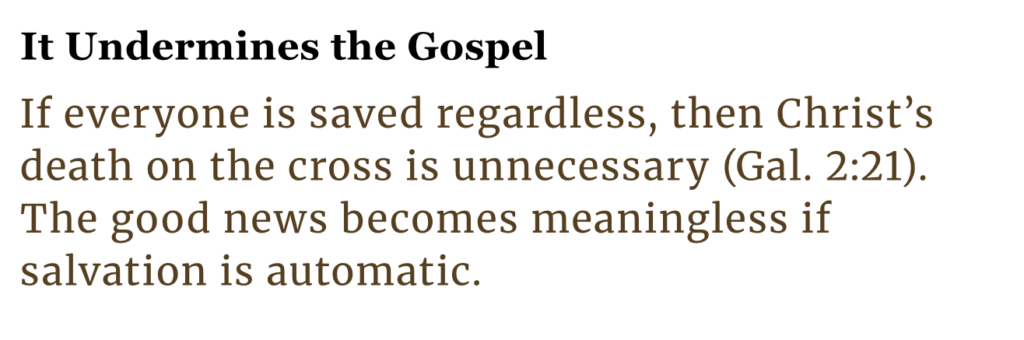
This common objection was also answered in my eBook, so I’ll just quote myself here:
It’s also often asserted that, “If everyone gets saved, then Jesus died in vain.” This is a very strange, yet also extremely common, claim you’ll hear from many Christians who just aren’t thinking things through particularly carefully. Because the truth is, if Jesus didn’t die, then nobody would get saved. Really, this assertion is no different from saying, “If only a few people get saved, then Jesus died in vain since some people will not suffer without end in hell.” Either way, we (should) all realize it’s what Christ did that saves us, and recognize that this statement is a sign of lazy thinking.
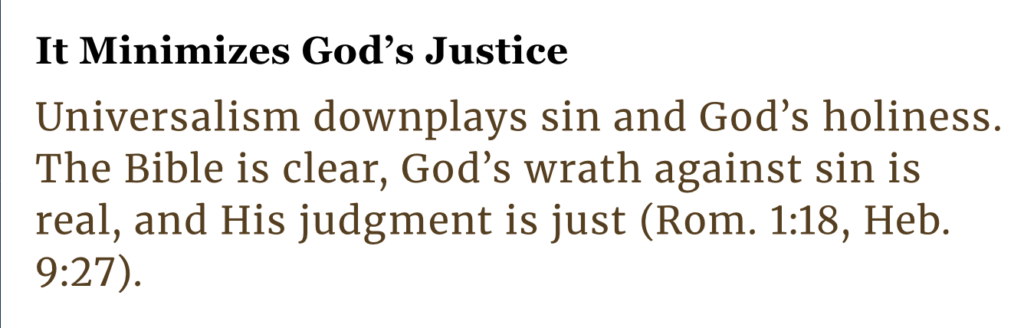
Yet another common objection that was answered in said eBook. I’m sure you’re seeing a pattern here by now, and I’m not going to even quote my whole response from the eBook this time, because it’s enough to say that we Universalists actually acknowledge God’s justice, holiness, judgement, and wrath to a far greater extent than any Infernalist or Annihilationist does, as anyone who has read my eBook knows, and we also don’t downplay sin at all, as, again, anyone who has read my eBook knows, so I’m going to leave it up to Dave and and anyone else reading this article who hasn’t read my eBook yet to do so and discover why I say that.
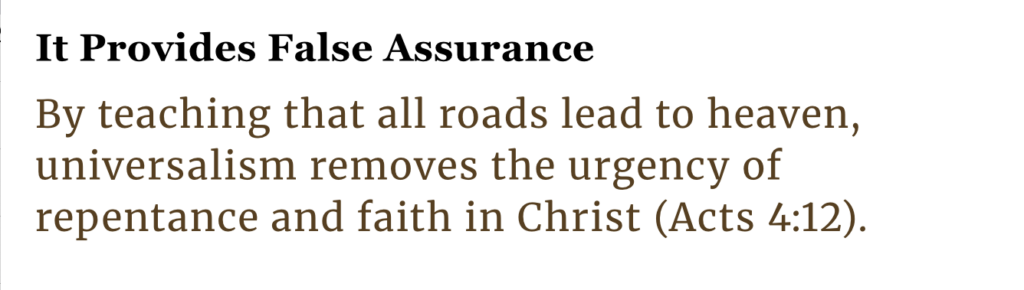
Here’s another common misassumption most Christians make about Universalism. We don’t actually believe that all roads lead to heaven. In fact, we don’t even believe that everyone will end up in heaven in the first place (even if we believe everyone will eventually be saved on the New Earth, which is quite different from heaven, as those who understand the Bible are aware). We 100% believe that it’s only through Christ’s death for our sins, burial, and resurrection on the third day that anyone is saved when it comes to general salvation, and we also believe that the special salvation is only through faith that this Good News is true. And if one isn’t aware of the difference between these two types of salvation in the Bible, they’re not qualified to even begin discussing soteriology yet and, yes, need to go read that eBook.
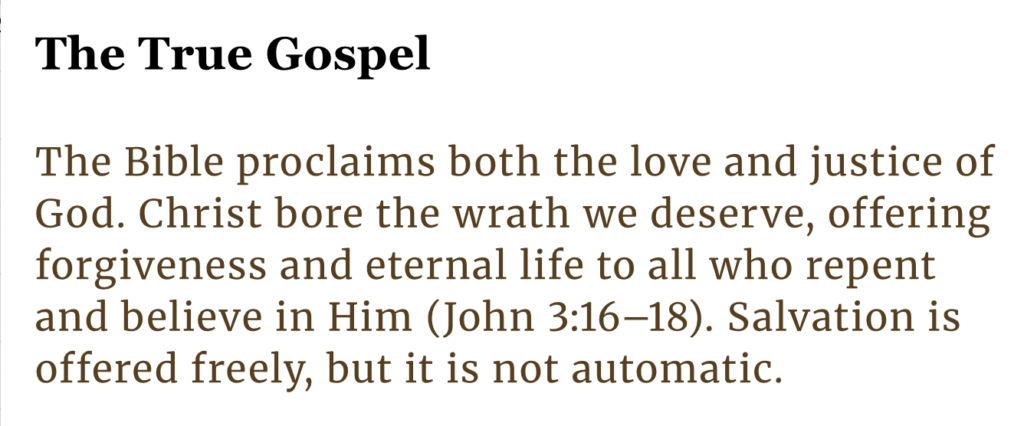
This is not the Gospel at all. I’ve written about it time and again, so I’m not going to repeat the whole thing here, but the true Gospel is found in my Biblical Universalism eBook.
Dave then goes on to conclude that Universalism is false because of the same misassumptions he made throughout his article, which is that we think anyone can be saved apart from Jesus Christ.
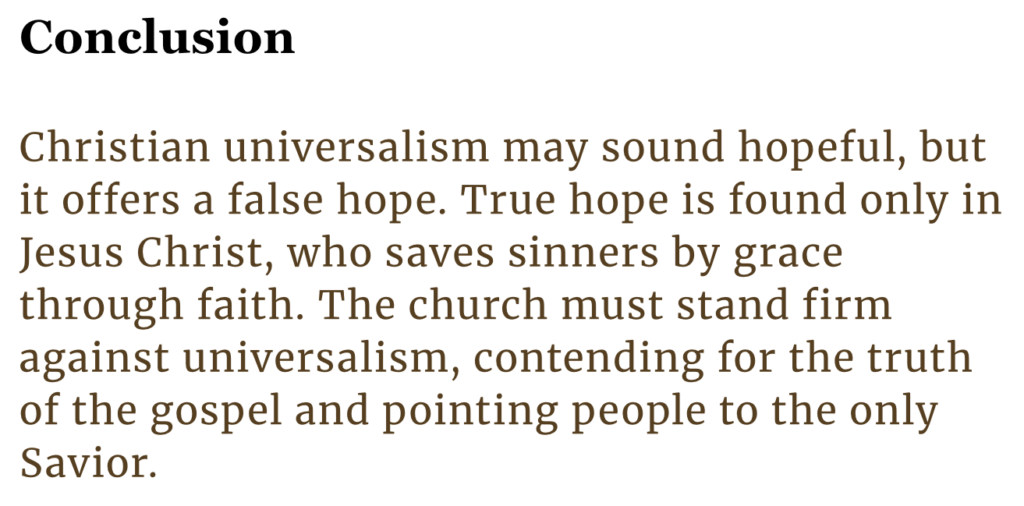
To be fair to Dave, he likely isn’t familiar with the difference between general salvation and the special salvation, and without being aware of this biblical truth, it becomes impossible to see the truth about anything to do with soteriology. So I trust and hope he’s open to correction and will read this article (which I’ve sent to him in response to a link to his article that he posted on Twitter recently) and will come to a realization of the truth and get saved. Here, once again, is that link (and remember, the eBook is completely free): Biblical Universalism
Oh, and Dave, if you do read this, I am sorry for picking on you here. It’s just that I happened to come across your article on Twitter, and it was perfect for making the points I wanted to make about why people need to do their homework before trying to criticize what they don’t understand when it comes to Universalism. And I hope that you do read my book and that one day we’re brothers in the body of Christ.